I see that question all the time on Facebook and most of the Blogs that I read. For the simple, easy, straight forward answer, YES you do. There are so many factors involved here that I can not possibility cover them all in a single post but, I would like to cover the basics so that you can better understand why you need a Power Management system of some kind.
1. You need to know what the AC (Shore Power) voltage is inside your rig. This is the power that indirectly powers lights, water heater, microwave, furnace, charger for the 12 volt battery system, etc. If the voltage gets below 102 volts and should stay there for a few minutes it would be possible to sustain approximately $1200 of damage or more.
So what do you need? You will need a AC Line Voltage Monitor . The unit shown below is plugged into an AC wall outlet that you can see and will monitor what the line voltage is. If it should go below 105 volts you need to unplug your rig from the outside power pedestal until the voltage goes back to normal.
 |
| AC Line Voltage Monitor |
So how do you know when the outside power pedestal is back to normal. You plug the Voltage Monitor into the 125 volt two pin socket in the power pedestal and see what the monitor reads. It should read 110 volts or higher up to 125 volts. The same caution goes for over voltage. You should unplug the rig form the power pedestal if your Voltage Monitor begins to reads over 122 Volts. Plug the Voltage Monitor into the power pedestal and watch for the voltage to drop to below 122 Volts.
Could this monitoring of the voltage be done for less money? Yes, by using a cheap Digital Volt Meter pictured below;
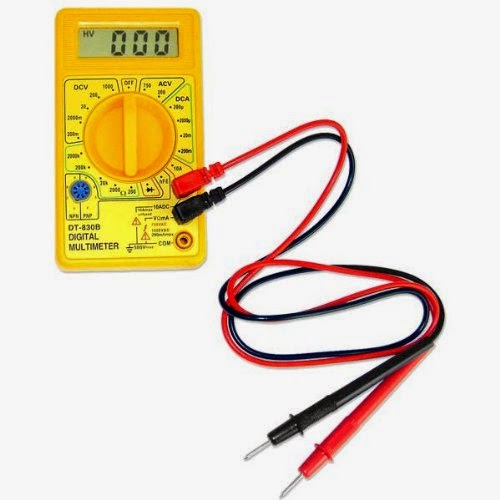 |
| Digital Volt Meter |
You could plug the test leads that come with the meter into the meter and then the other ends of the test leads into the slots on the AC wall socket. (Caution do not leave unattended) Or you could make up a cord from a 6 foot extension cord and the test leads that come with the meter. See below for an example.
 |
| AC Cord With Test Meter Leads |
2. Next is The Polarity Tester . This is used to be sure that the Neutral wire of the power line is not reversed with the positive lead of the power line. If that where to happen you could have what is called a hot skin condition. Meaning that if you had an aluminium skinned rig you could receive quite a shock from your rig.
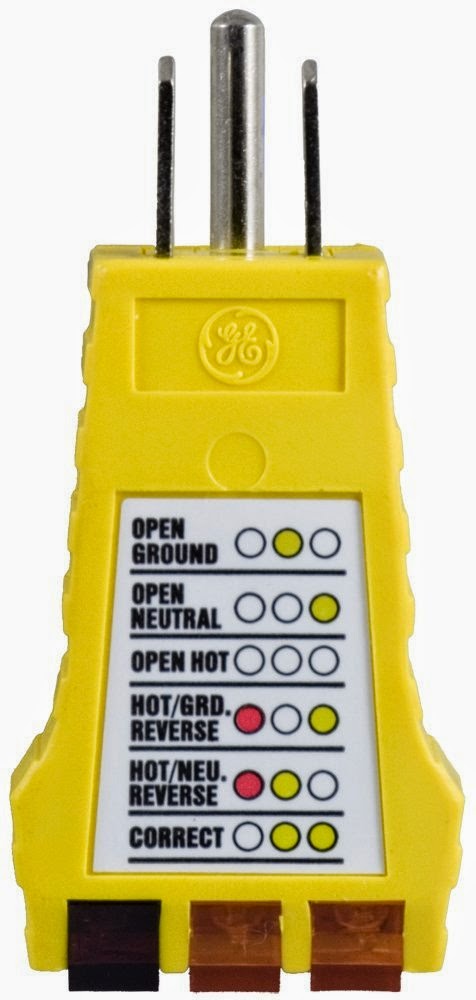 |
| The Polarity Tester |
The Polarity Tester can also tell you if the Earth Ground (the bear copper wire) is hooked up properly.
The Earth Ground is a separate conductor which may seem to be doing nothing but, is in fact a protective wire. It is there, ready to take the current away to earth ground, from the body or frame of the electrical device it is connected-to, makes contact with any “hot” wire. [the 120 volts mains power is carried in two current carrying conductors called “hot” and “neutral”.]
So, IF one of the “hot” conductors should contact the metal frame of the rig or housing of an appliance, perhaps because the appliance got damaged by being dropped from a table, or similar accident, the third wire which is the earth ground wire, which runs directly from the housing to the grounding [or earth ground bus] in the fuse or breaker panel, will in effect cause a short circuit which should blow the fuse or trip the breaker.
This third wire also guarantees a current path back to the electrical panel where the fuse or circuit breaker protecting that circuit is located, in the event that the hot wire should come in contact with the rig frame, but the neutral conductor should happen to have been cut or damage and become disconnected, or open.
The idea is to guarantee that if a part of the rig, device or appliance should become “hot,” which could be fatal to anyone who then came into contact with it. That the earth ground would trip/open the circuit protection device [fuse or breaker], and turn off the flow of AC current.
To help further in checking for unwanted or wanted electricity a good investment is the the Voltage Sensor which is shown below;
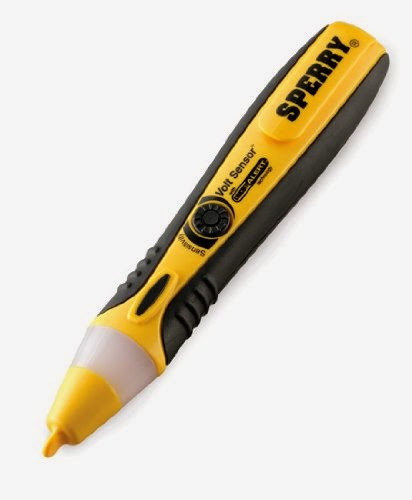 |
| Voltage Sensor |
With this probe you do not need to touch the power line to tell if there is voltage present. You can use this probe to find power lines behind the wall or under the floor of the Rig as well as the towing vehicle.
3. Often times you want to know or need to know how much power something uses, especially if you keep popping a breaker or the power pedestal. The solution is Kill-A-Watt . The unit shown below can be used to show how much power a appliance, tool, or piece of electronics is using.
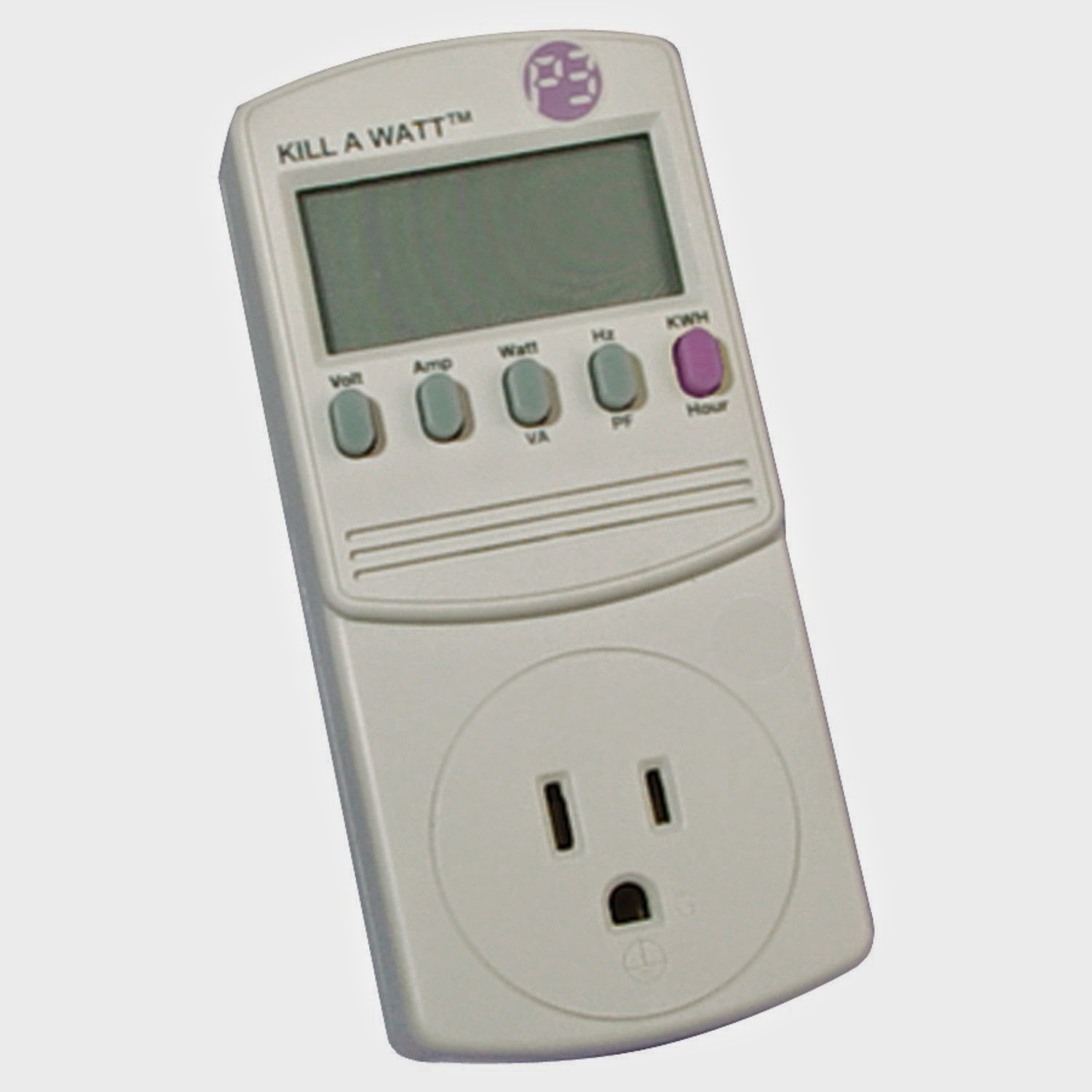 |
| Kill-A-Watt |
4. Next let’s look at surge protectors for the various pieces of equipment in your Rig. Surge Protectors protect only what is plugged into them and only for over voltage surges. Surge Protectors do not protect for under voltage or high voltages. Shown below is a pair of good simple surge protectors;
 |
| Surge Protectors |
There are Appliance Surge Protectors made just for appliances like, microwave and coffee makers
 |
| Appliance Surge Protector |
AC refrigerators, freezers.
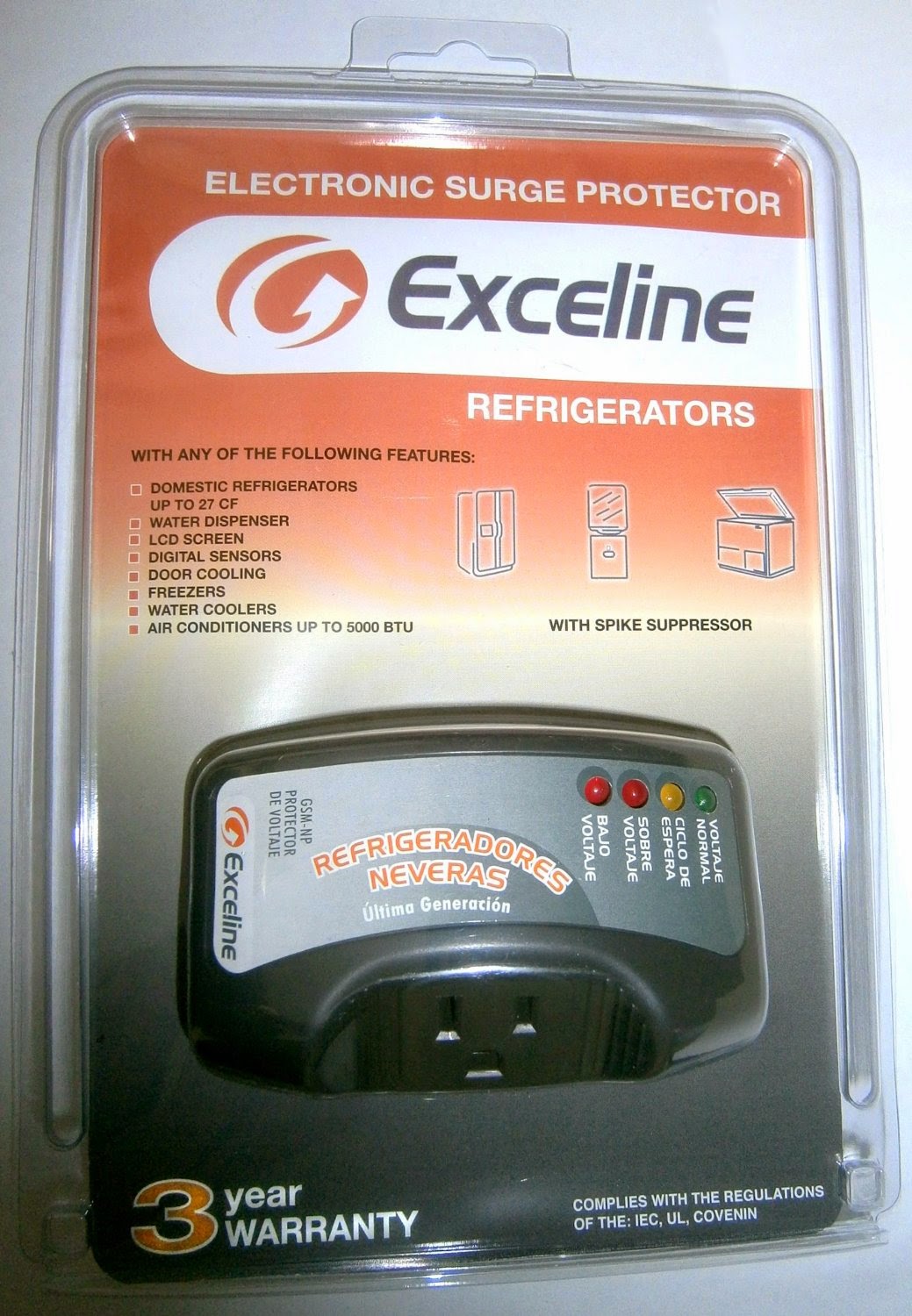 |
| Refrigerator/Freezer Surge Protector |
These special surge protectors offer extra features like audible alarms, flashing lights, displays, etc and are to be used with just the items listed on the packaging for the one you would buy.
5. Next is a group of power management items that will protect your entire Rig not just one item or several items in it. First is the Portable Power Management System This type of system looks at High and Low voltage protection, time delay for air conditioning compressor start up, 3-mode surge protection, reverse polarity protection, open neutral protection, open ground protection, AC frequency protection accidental 220 Volt protection. Includes an Integrated information panel, previous error code display, is weather resistant, and has a built-in locking bracket so it can be chained to the power pedestal at the campground to prevent theft. The only thing this unit can not do is flush the black water tank. The miracle unit we are talking about is shown below.
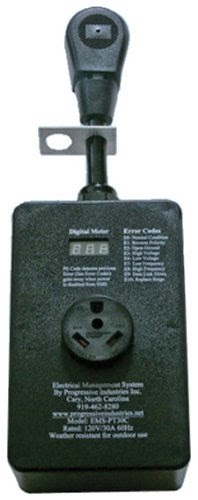 |
| 30 Amp Portable Power Management System |
These portable units come in two sizes the one above 30 amp and the one shown below 50 amp.
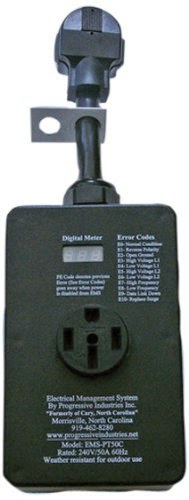 |
| 50 Amp Portable Power Management System |
Let’s say you were involved in a lightning caused power surge at a campground. It is estimated you would suffer approximately $3000 worth of damage to the electrical system of your Rig along with the things plugged into it. The features of the 50 amp unit are the same as the 30 amp unit.
Ah, but there is more! What happens if you do not want something portable but something more permanent in the Rig? Then you have the permanent installed units which are called Fixed Power Management Systems These units are not really DIY type of items but, they can be installed by the DIYer if care is taken during the installation. The 30 amp models is shown below;
 |
| 30 Amp Fixed Power Management Systems |
There is also a 50 amp version of the same unit as above and can be found here; 50 Amp Fixed Power Management Systems . The features of both units are the same and are, high and low voltage protection, time delay for air conditioning compressor start-up, 3 mode surge protection, surge trip indicator, reverse polarity protection, open neutral protection, open ground protection, AC frequency protection. Accidental 220V protection, with remote information display panel, and unit bypass switch. Unfortunately this unit also does not dump the black tank.
I hope that you now have come to the conclusion that some type of power management is needed to protect your Rig, its contents and YOU!
Until Next Time



 RVer Hints & Tips