The Waste Treatment Tank

I do not plan on explaining how to dump the grey and black tanks on your RV.  What I would like to do is to explain how to stay out of trouble in dumping your tanks and dis-spell some of myths on when to dump your tanks.

So what is the main differences between a sticks and bricks waste disposal and your RV.  First there is no worry about getting rid of the waste at your sticks and bricks.  You let water splash into the sink and it just disappears down the drain.  No matter how much water you put into the sink.  You flush the toilet you never have to worry about sewer smell coming back-up  and if the toilet gets clogged up you just plunge a few times and presto the waste is gone.

None of the above is true for your RV.  If you put too much water down your sink, you will over fill the grey water tank and the waste water will flow into your bathtub or shower.  If you leave your waste slinky hose hooked up with the open/close valve on you RV open you will invite sewer gas from the campground into your RV.  Because your toilet is on top of your black water tank there is a limit to how much waste you can put down there as well.  Also if it gets plugged up, plunging it will not help!

So what to do.  For the smell problem that might occur in the grey water tank I use Grey Water Tank Smell Killer.  It works.

Grey Water Tank Smell Killer

As for the water back-up you should dump your grey tank every two days while camping or sooner if the water starts to back up.  This is the tank you can dump before you leave for home.

The grey water tank should be the last tank you dump before you head for home.  After dumping it you need to add approximately 1 gallon of clean water back into it and one of the grey water tank smell killers and you are good to go.

BLACK WATER TANK

Now the black water tank the scourge of RV camping.  There are a lot of does  and don’t about this tank so let’s get started.

No matter what you hear or read most all of the sensors that are supposed to tell you how full the black water tank is, do not work.  I have been told and it has been proven that the sensors mounted on the outside of the tank do seem to do a better job than those sensors that are inside the blackwater tank.  Most of the crazy ideas floating around about how to make the sensors inside the black water tank work also do not work.  To fix the problem of , how full is the blackwater tank.  So how do you know when it is time to dump the tank?  Look down inside the toilet and if you see blackwater, hear gurgling, and stuff floating, it’s time to dump the tank.  So what can you do to improve how the black water tank works.

Use only quick dissolving toilet paper in this tank.  Toilet paper made just for RV is fine such as RV 2ply Toilet Paper or septic tank safe toilet paper.  But you can use just about any toilet paper that will quickly dissolve.  To test any brand of toilet paper to see if it can be used,  take a glass jar with a lid.  Fill the jar about 3/4 full and add a single sheet of your toilet paper to be tested.  Put on the lid and give the jar three quick shakes.  If most of the sheet of toilet paper is broken up and coming apart you are ok to use the toilet paper tested.

Check here for more details RV Toilet Paper Safe .

We have safe paper what next?  How about something to get rid of the smell and help break down the waste. I would suggest Black Holding Tank Deodorizer and Dissolver

Black Holding Tank Deodorizer and Dissolver

This should be added to your black water tank regularly.  I add one tablet after each time I dump my black water tank and another during hot weather if there is a smell problem.

Oxy-Kem 

Here is another possible black tank treatment Oxy-Kem that comes highly recommended.  I have not tried it so I can’t comment on how well it works, but I do plan to and will let you know.

Here is an all natural black tank cleaner that really cleans the tank as well as the sensors.  I have not tried it myself but all of the reports I am getting say it works.Unique Black Tank Cleaner

Do not dump your tank unless it is full or near full.  I know what you must be thinking but we never fill it over a weekend trip.  I realize that maybe the case but, you need to fill it up manually and dump it before you leave the park.  You do not need a hose or make this a big deal just flush the toilet and insert one of these things.
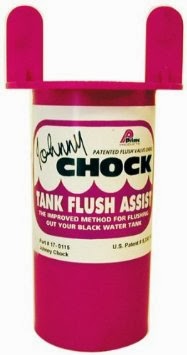
Johnny Chock

Johnny Chock

Let the toilet run for approximately 10 to 15 minutes depending on how full your tank is.  If you can see the water in the black tank from the toilet that is full enough.  Remove the Johnny Chock and store.  Now dump the black tank like you usually do.  Add about a gallon or more of water (you can run the toilet with the Johnny Chock for 2 to 3 minutes and that should do it.  Drop in one of your black tank tablets and you are ready for the next outing.

Never leave the black tank drain valve open.  You are just asking for the smells of your neighbor’s sewer to come up into your RV.  If you dump your holding tank to frequently you will have a build up of solid waste called the black pyramid of death (just an expression).  This is a problem you do not want and could cause an very expensive repair.  To prevent the “pyramid of death” you need to flush your black tank when it is at least 3/4 full and refill it so that there is some water splashing inside as you  drive back home.

One of the things you hear and I have tried is to add one cup of cheap dish washer liquid soap to break-up waste and Calgon to lube the inside of the tank.  Does it work?  I have been using it and have not seen much of an improvement.  I plan on using this in the grey water tank next to see if it makes a difference to that tank.

Quick Guide To Waste Tank Dumping

  1. Grey Water Tank can be dumped anytime.
  2. Use a tank treatment when needed. (to reduce smell and add microbes)
  3. Dump Black Tank when at least 3/4 full.
  4. Add small amount of water to both tanks after dumping. (up to 2 gallons)
  5. Use the grey water to flush out sewer hoses.


Until Next Time.

Stop-by the Weekend RVers group on Facebook.

Campfire Safety

As we all get ready to start camping or have already started.  I am reminded that in many parts of the USA you can not have a campfire do to outdoor burning restrictions caused by the lack of RAIN.  So many of us remember the nights spent by the fire watching the sparks work their way up into the air from the burning logs and hearing the original snap, crackle, and pop. (sorry Kellogg)  Well things have changed that’s for sure.  First in many states now you can not bring firewood from one state to another or even from one part of a state to another do to bugs, worms, and what have you.  You must use the firewood that is at the park store or Ranger station.

How far is too far to move firewood? And what is meant by “local” firewood?  When discussing local firewood, I am referring to the closest convenient source of wood that you can find. That might be from down the street, or a state forest in your county. As a general rule of thumb, 50 miles is too far to move firewood, and 10 miles or less is the max firewood should be moved.  In many states there are rules, regulations, and quarantines that clearly state how far is too far. Always acquaint yourself with local rules and regulations when transporting firewood from one jurisdiction to another.  Find out more here Don’t Move Firewood .

So you buy some firewood from the Ranger’s supply at the park and you can burn it during the time you are in the part but you have to leave what you do not burn behind.  How can you make a camp fire fun and exciting?  Well, S’mores are fun to make S’mores.

When you are done making the S’mores you might want to be amazed by the camp fire northern light show.  Camp Fire Northern Light Show .

Now sit back and enjoy the rest of the evening and watch the light show from your camp fire.

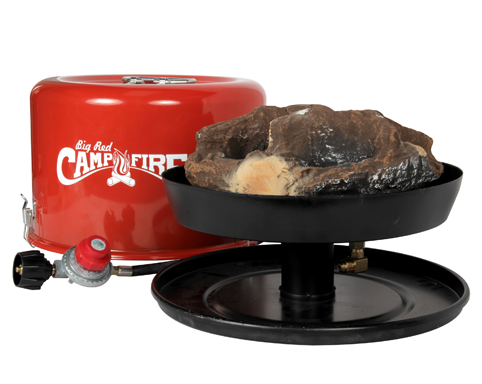
What happens when you can not burn wood but you still want to sit around a campfire.  Well the solution for that is the gas campfire.  Most RV camping areas do not have a problem with the gas campfire even if there is a burn ban because the fire does not give off sparks and with the turn of the gas valve the fire is off.  You can still make those S’mores the kids want and you can still enjoy sitting outside of the RV around the campfire.  See Portable Gas Campfire for what I am talking about.

This portable gas campfire runs off of LP gas either the little 1lb green cylinders (runs for 2hrs) or the 10lb gas tanks.  It runs for hours and the red cover is used for storage and to elevate the gas campfire off the ground.  Also the red cover has the carry handle attached.  With the extra accessory you can even cook on the campfire just like a fire log one.

With any fire outside you need to have a fire extinguisher at the ready just in case.  Not just for grass fires. Fire Gone White/Red Fire Extinguisher – 16 oz

Until next time.

To Lube Or Not To Lube That Is The Question

Answer: To Lube.  Most RVers lube the hitch and maybe the ball of the pull-a-long with Reese Hitch and Ball Grease

Reese Hitch and Ball Grease

that is what I use.  But is that all there is?  Does lubrication of the RV stop there?  I am afraid not.  Let’s see what else needs to be lubed and with what type of lubrication to make RVing fun and safe for you and your family.

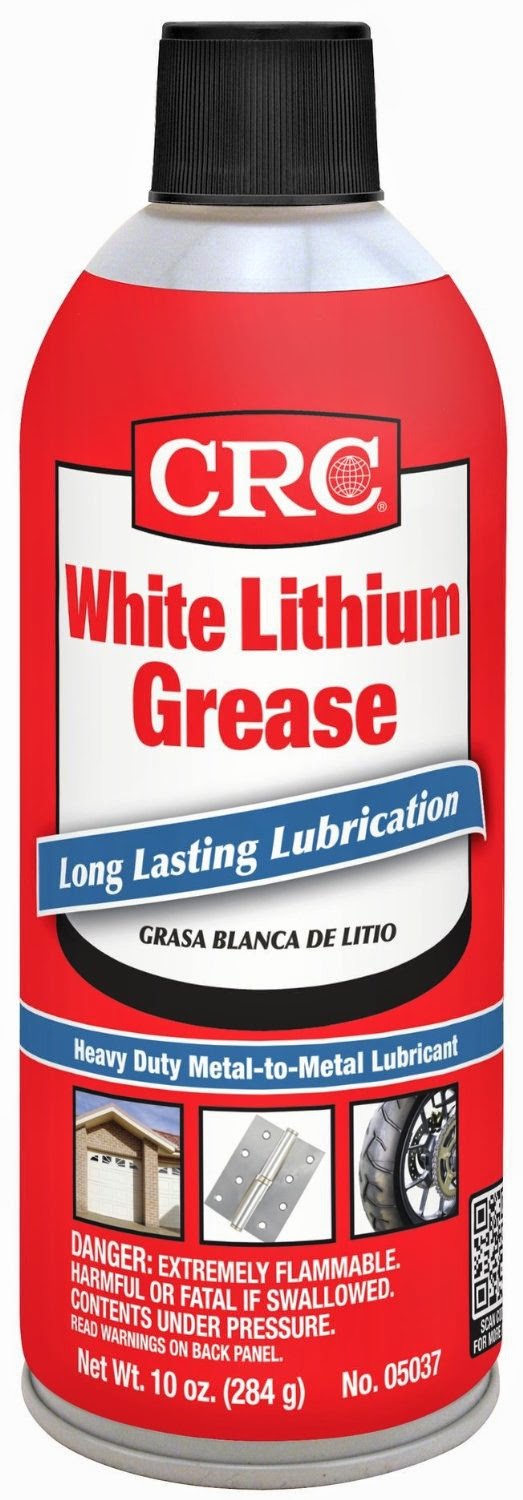
Ok we have covered the ball and hitch but what about the tongue jack and shaft for the front foot?  Most of us do not even remember the last time that was lubed do we?  Well you’re in luck.  Most of the time no lubrication will be required.  Just clean the part that goes up and down to remove the grime that maybe there and you are good to go.  However if while turning the handle and the crank tightens up you should squirt some White Lithium Grease in the top gear area.

White Lithium Grease

This is good for a quick field repair but for a better fix keep reading.

Yours may differ but you get the idea, right?

Access to this gear area can be found by a small hole just below the handle on the tube or you may have to remove the handle and lift up the top cover to expose the gear area or in some cases the top cover just above the crank will pop off and allow you to add some grease.  Some of the newer tongue jacks  come with a Zerk fitting that you can use a grease gun to pump grease into the tongue jack.

I’ll bet some of you are lucky enough to have one of those 12 volt power tongue jacks that raise and lower the RV with the push of a button.  (I am saving for one of those myself.)  Cleaning of the pipe that goes up and down is fine, but beyond that follow the manufactures instructions for maintenance and if the tube hangs up be sure to take the unit in for service.

Next comes the stabilizer jacks.  The ones on my KZ Spree are manual crank down so there is a lot to lube.

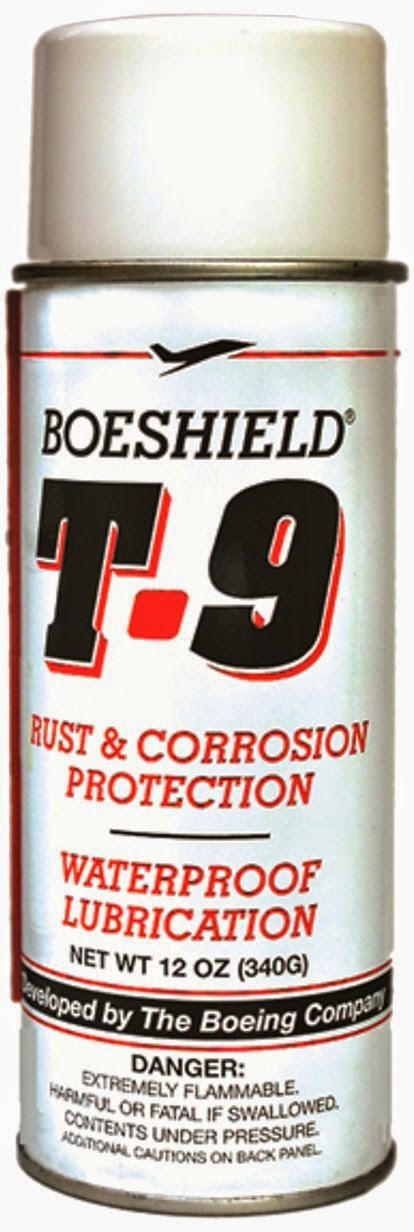
First clean off the screw, getting the threads good and clean.  Then apply spray white grease to the threads, watch for drips.  Next lube the driver area in the front of the jack with T-9 Lube Spray

T-9 Lube Spray

it is the best spray for outdoor lubrication I have found.  While you have the spray out get all the pivot points on the jack.  You may have to crank the jack up and down a few times to find them all.

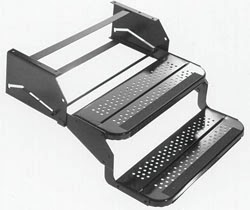
Then we have the folding entrance steps.

As each trailer step is a bit different it is best just to tell you to locate the folding points and use your T-9 or spray white grease to lube those points  It is important to not allow the pivot points of the steps to rust or be bent by forcing the steps open.

Be sure to check the door hinges of the RV to be sure that they are smooth operating opening and closing and that the handle and lock operate smoothly.  T-9 here is the best choice.

Every two years or 5000 mile which ever occurs first you should have the wheel bearings checked and repacked with grease.  You don’t want the tires to fall off the axles do you?  Anyway, while the Technician is there repacking the wheels have him check the breaks as well.

Until next time.

Do RVers Really Need A Power Management System?

I see that question all the time on Facebook and most of the Blogs that I read.  For the simple, easy, straight forward answer, YES you do.  There are so many factors involved here that I can not possibility cover them all in a single post but, I would like to cover the basics so that you can better understand why you need a Power Management system of some kind.

1. You need to know what the AC (Shore Power) voltage is inside your rig.  This is the power that indirectly powers lights, water heater, microwave, furnace, charger for the 12 volt battery system, etc.  If the voltage gets below 102 volts and should stay there for a few minutes it would be possible to sustain approximately $1200 of damage or more.

So what do you need?  You will need a AC Line Voltage Monitor .  The unit shown below is plugged into an AC wall outlet that you can see and will monitor what the line voltage is.  If it should go below 105 volts you need to unplug your rig from the outside power pedestal until the voltage goes back to normal.

AC Line Voltage Monitor

So how do you know when the outside power pedestal is back to normal.  You plug the Voltage Monitor into the 125 volt two pin socket in the power pedestal and see what the monitor reads.  It should read 110 volts or higher up to 125 volts.  The same caution goes for over voltage.  You should unplug the rig form the power pedestal if your Voltage Monitor begins to reads over 122 Volts.  Plug the Voltage Monitor into the power pedestal and watch for the voltage to drop to below 122 Volts.

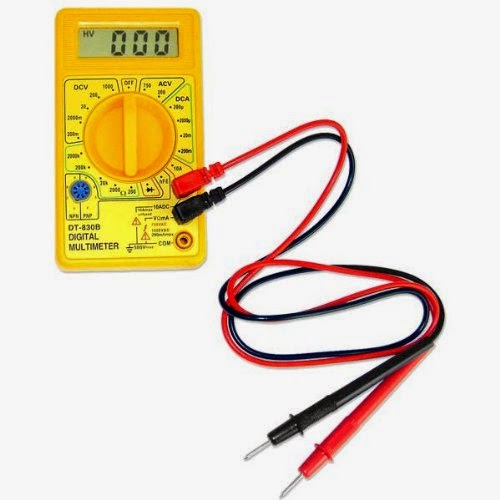
Could this monitoring of the voltage be done for less money?  Yes, by using a cheap Digital Volt Meter  pictured below;

 Digital Volt Meter  

You could plug the test leads that come with the meter into the meter and then the other ends of the test leads into the slots on the AC wall socket. (Caution do not leave unattended) Or  you could make up a cord from a 6 foot extension cord and the test leads that come with the meter.  See below for an example.

AC Cord With Test Meter Leads

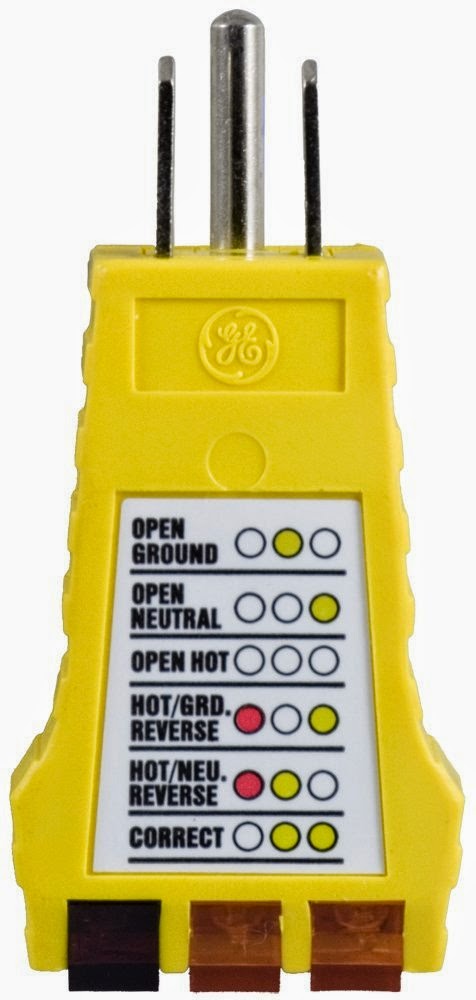
2. Next is  The Polarity Tester .  This is used to be sure that the Neutral wire of the power line is not reversed with the positive lead of the power line.  If that where to happen you could have what is called a hot skin condition.  Meaning that if you had an aluminium skinned rig you could receive quite a shock from your rig.

 The Polarity Tester

The Polarity Tester can also tell you if the Earth Ground (the bear copper wire) is hooked up properly.  

The Earth Ground is a separate conductor which may seem to be doing nothing but, is in fact a protective wire. It is there, ready to take the current away to earth ground, from the body or frame of the electrical device it is connected-to, makes contact with any “hot” wire. [the 120 volts mains power is carried in two current carrying conductors called “hot” and “neutral”.] 
So, IF one of the “hot” conductors should contact the metal frame of the rig or housing of an appliance, perhaps because the appliance got damaged by being dropped from a table, or similar accident,  the third wire which is the earth ground wire, which runs directly from the housing to the grounding [or earth ground bus] in the fuse or breaker panel, will in effect cause a short circuit which should blow the fuse or trip the breaker. 
This third wire also guarantees a current path back to the electrical panel where the fuse or circuit breaker protecting that circuit is located, in the event that the hot wire should come in contact with the rig frame, but the neutral conductor should happen to have been cut or damage and become disconnected, or open. 
The idea is to guarantee that if a part of the rig, device or appliance should become “hot,” which could be fatal to anyone who then came into contact with it. That the earth ground would trip/open the circuit protection device [fuse or breaker], and turn off the flow of AC current. 

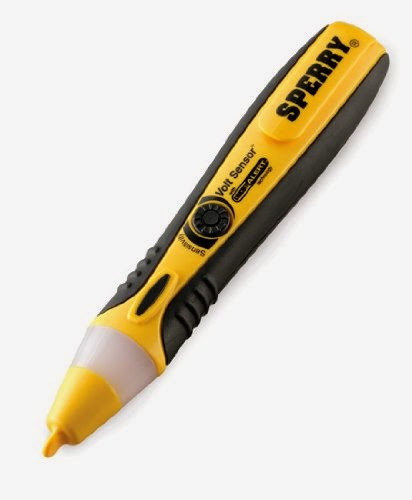
To help further in checking for unwanted or wanted electricity a good investment is the the Voltage Sensor which is shown below;

 Voltage Sensor

With this probe you do not need to touch the power line to tell if there is voltage present.  You can use this probe to find power lines behind the wall or under the floor of the Rig as well as the towing vehicle.

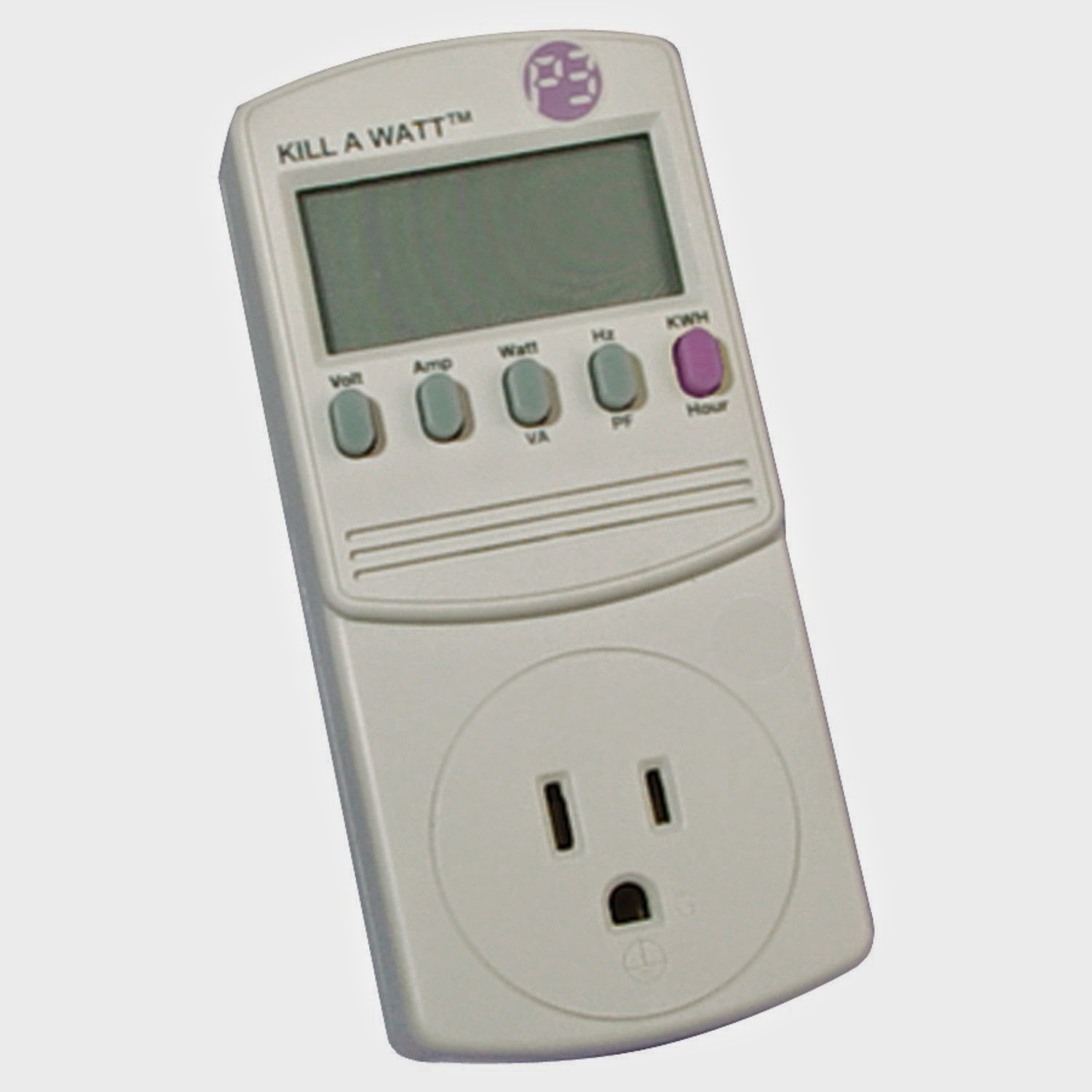
3.  Often times you want to know or need to know how much power something uses, especially if you keep popping a breaker or the power pedestal. The solution is Kill-A-Watt .  The unit shown below can be used to show how much power a appliance, tool, or piece of electronics is using.

 Kill-A-Watt

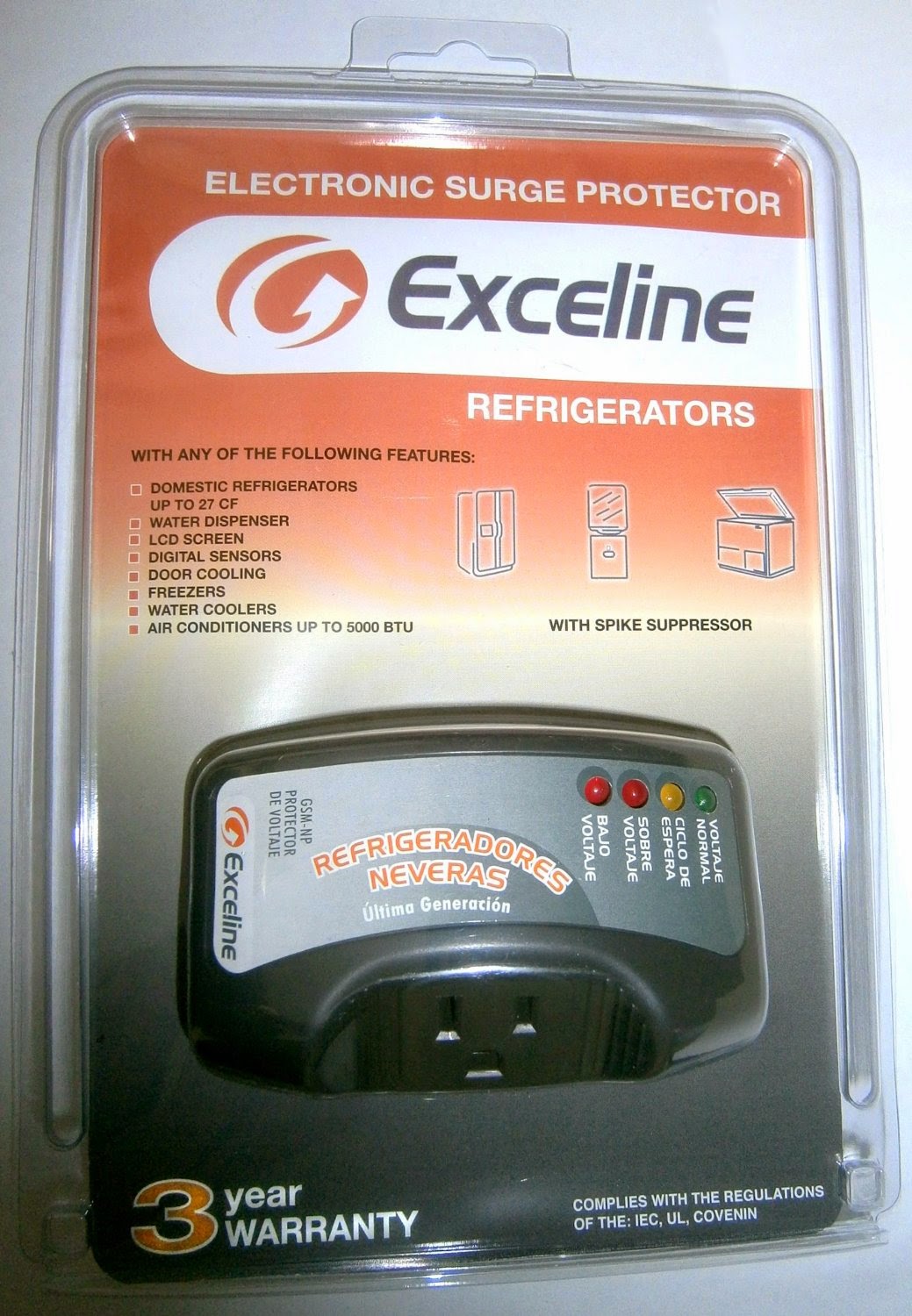
4. Next let’s look at surge protectors for the various pieces of equipment in your Rig.  Surge Protectors protect only what is plugged into them and only for over voltage surges.  Surge Protectors do not protect for under voltage or high voltages.  Shown below is a pair of good simple surge protectors;

Surge Protectors

There are Appliance Surge Protectors made just for appliances likemicrowave and coffee makers

Appliance Surge Protector

AC refrigerators, freezers

Refrigerator/Freezer Surge Protector


These special surge protectors offer extra features like audible alarms, flashing lights, displays, etc and are to be used with just the items listed on the packaging for the one you would buy.

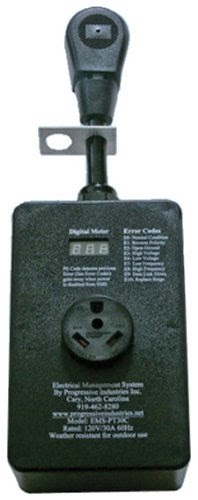
5.  Next is a group of power management items that will protect your entire Rig not just one item or several items in it. First is the Portable Power Management System This type of system looks at High and Low voltage protection, time delay for air conditioning compressor start up, 3-mode surge protection, reverse polarity protection, open neutral protection, open ground protection, AC frequency protection accidental 220 Volt protection. Includes an Integrated information panel, previous error code display, is weather resistant, and has a built-in locking bracket so it can be chained to the power pedestal at the campground to prevent theft.  The only thing this unit can not do is flush the black water tank.  The miracle unit we are talking about is shown below.

30 Amp Portable Power Management System

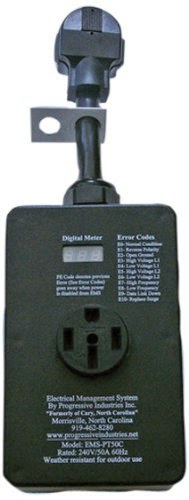
These portable units come in two sizes the one above 30 amp and the one shown below 50 amp.

50 Amp Portable Power Management System

Let’s say you were involved in a lightning caused power surge at a campground.  It is estimated you would suffer approximately $3000 worth of damage to the electrical system of your Rig along with the things plugged into it.  The features of the 50 amp unit are the same as the 30 amp unit.

Ah, but there is more!  What happens if you do not want something portable but something more permanent in the Rig? Then you have the permanent installed units which are called Fixed Power Management Systems  These units are not really DIY type of items but, they can be installed by the DIYer if care is taken during the installation.  The 30 amp models is shown below;

 30 Amp Fixed Power Management Systems

There is also a 50 amp version of the same unit as above and can be found here;  50 Amp Fixed Power Management Systems .  The features of both units are the same and are,  high and low voltage protection, time delay for air conditioning compressor start-up, 3 mode surge protection, surge trip indicator, reverse polarity protection, open neutral protection, open ground protection, AC frequency protection. Accidental 220V protection, with remote information display panel, and unit bypass switch.  Unfortunately this unit also does not dump the black tank.


I hope that you now have come to the conclusion that some type of power management is needed to protect your Rig, its contents and YOU!


Until Next Time

Let’s Check Those Tires

So what do you do first when you take out your RV? There are many things you could do first but, I recommend that you check the tire pressure with a good tire pressure gage. The tire’s max pressure is located on the side wall of the tires on your RV. Do not use the pressures recommended by the RV manufacture UNLESS the RV has the original tires that it came with from the factory.

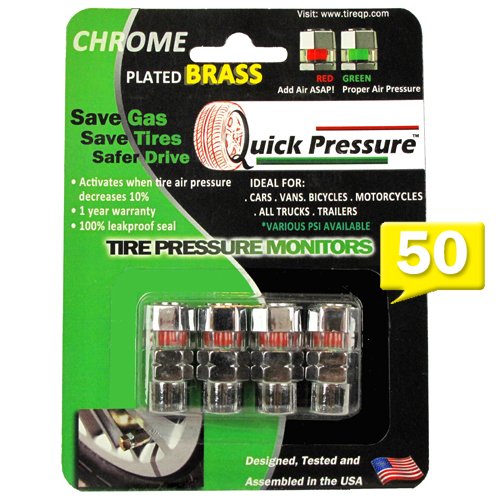
I use both a screw-on tire pressure indicator, such as Quick-Pressure-PSI-50-Monitor , which at a glance can tell you that you may have a problem [use only if your tires are supposed to have 50 lbs of air when cold.  [Other pressures are available] and the traditional pencil like guage, such as Pencil-Pressure Gage   to test or look at the tire pressure gage before you have moved your RV a mile.

Quick-Pressure-PSI-50-Monitor

Quick-Pressure-PSI-50-Monitor

Pencil Air Gage 2

 Pencil-Pressure Gage

Please Note: You need to check the tire pressure when the tire is still cold.

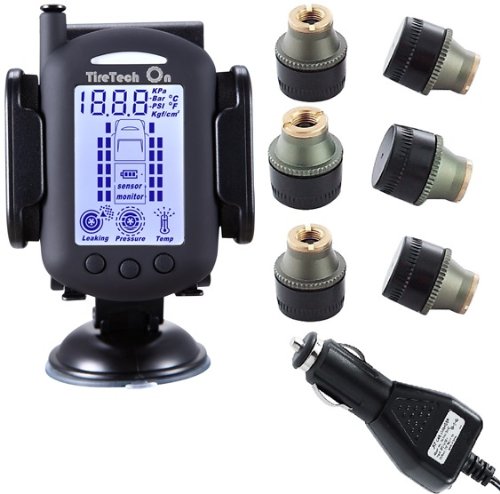
Another good, but pricey, system for monitoring your tire pressure as well as the tire temperature is the Wireless Tire Pressure Monitoring System.  I am saving for this one.

TireTech Wireless Monitor

Wireless Tire Pressure Monitoring System

The system will tell you of an overheated tire, in most cases before it blows, and of course tell you of low pressure in any monitored tire, even the spare, in real time no need to stop every 20 miles and check those darn tires – LOL. When you stop for gas or a bathroom break you should do a tire check of the RV as well as tow vehicle. My daughter was checking the tow vehicle for me and found a large cut in the sidewall of the truck tire. We were able to get the tire replaced before the large accident occurred.  I did not even remember hitting or running over anything on the highway.

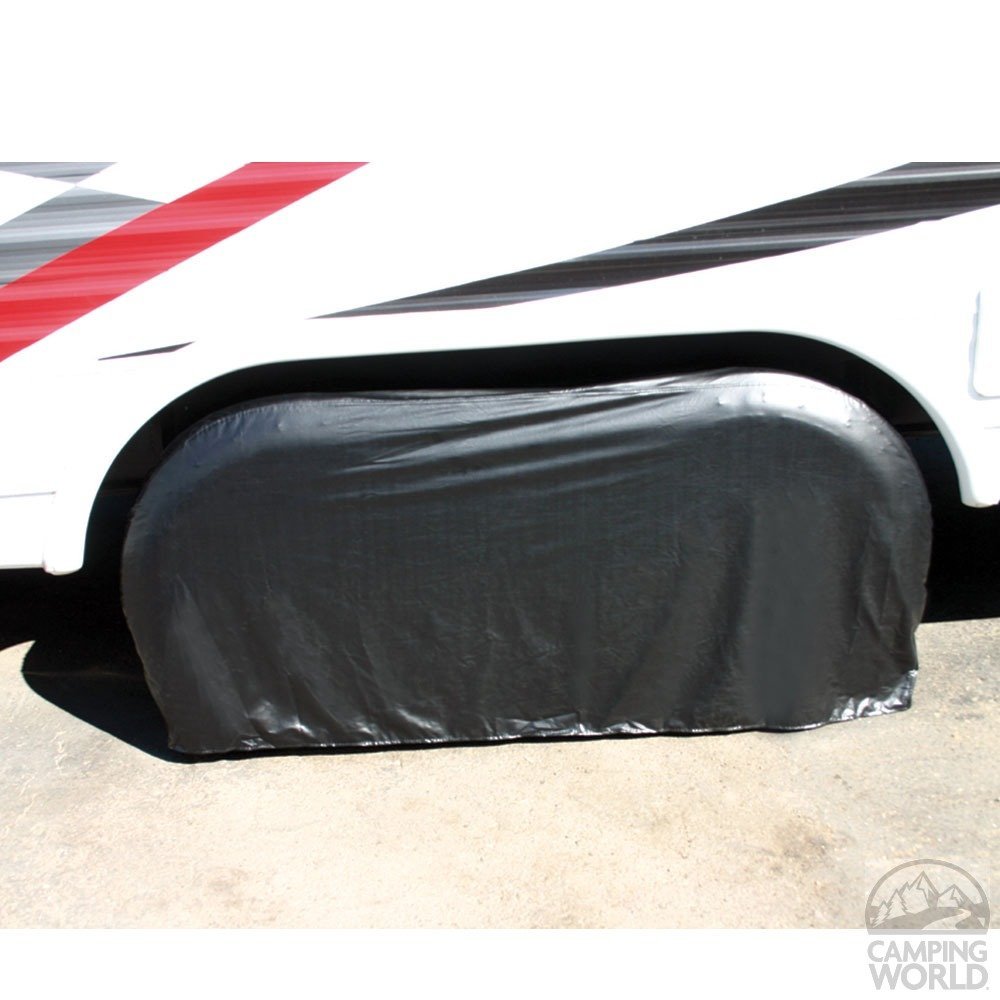
Be sure to carefully look at the tread, and the side walls both on the front and the back of the tire.  Most RV tire experts agree that if your tiers are more than five years old from the date of manufacture you should replace them.  Most tire failures occur when the side wall of the tire is under inflated or rots out from the inside where you can not see. You can thank Mr. Sun for sidewall failure in some cases. Most tires have a Mr. Sun inhibitor built-in but when a tire sits and sits the inhibitor does not get moved to the outside of the tire by the tire going round and round. Now you see why you need wheel covers right?

RV Tire Covers

Trailer Wheel Covers for less than $25.

To protect the tires in storage from Mr. Sun and any other nasties that come along. You can also use an RV Tire Protection Spray which is applied, as directed, to the tire side wall that is exposed to the sun.
I have used RV Tire Protection Spray with good luck. This spray is not designed to make the tire sidewall shinier,  it is not a decorative spray, but something that is designed to put back into the surface of the rubber what Mr Sun is taking out.

tire protective spray

RV Tire Protection Spray

Also note that if you are going to store the RV for an extended period of time you should protect the tread from the surface that the tires are sitting on. Nasty things can leach out of your tires into the blacktop or concrete that your RV sits on while being stored. Or from the blacktop or concrete into your tires during storage. You can use an Office Chair Mat that sells for less than $20 for each side of the RV and just back onto it as you are putting the RV away.  Now that is easy.

If you are supposed to replace your tires every five years how do you know when your tires were made? There is a code date molded into the sidewall of the tire. (you can thank our government) The National Highway Traffic Safety Administration (NHTSA) requires that Tire Identification Numbers be a combination of the letters DOT, followed by ten, eleven or twelve letters and/or numbers that identify the manufacturing location, tire size and manufacturer’s code, along with the week and year the tire was manufactured. Since 2000, the week and year the tire was produced has been provided by the last four digits of the Tire Identification Number with the 2 digits being used to identify the week immediately preceding the 2 digits used to identify the year.

Below is an example of a tire manufactured since 2000 with the current Tire Identification Number format.

In the example: DOT U2LL LMLR 5107

DOT U2LL LMLR 5107  Manufactured during the 51st week of the year

DOT U2LL LMLR 5107   Manufactured during 2007
While the entire Tire Identification Number is required to be molded onto one sidewall of every tire, current regulations also require that DOT and the first digits of the Tire Identification Number must also be molded onto the opposite sidewall. Therefore, it is possible to see a Tire Identification Number that appears incomplete and requires looking at the tire’s other sidewall to find the entire Tire Identification Number.
I know you are saying to yourself, but the RV is only three years old. We are not talking about the year your RV was built, but the year the tires were manufactured and they maybe not the same so please check. If your tire’s serial number can not be read by you, then you need to take the tire or RV to an RV dealer or tire shop and have the tires read.

Post_2000_Full_Dot

Please do not be pulling your RV with old tires that may jeopardize your families safety as well as others. [If you want more information on tire markings and such go to Tire Tech Information]

Ok, you have checked the date code of your tires and they are in fact only three years old. Tire pressure is up and you’re ready to go.

Not so fast!

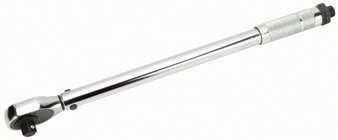
We need to discuss lug nut tightness.  Each Spring or before a major trip you should check the tightness of the lug nuts on each of the RV tires. You need to check your owners manual for the correct setting. My KZ Spree has the specifications of 100 ft LBS. I use a inexpensive torque wrench, which I keep in the RV tool box, to confirm the setting 1/2′ Torque Wrench .

Torque Wrench

1/2′ Torque Wrench

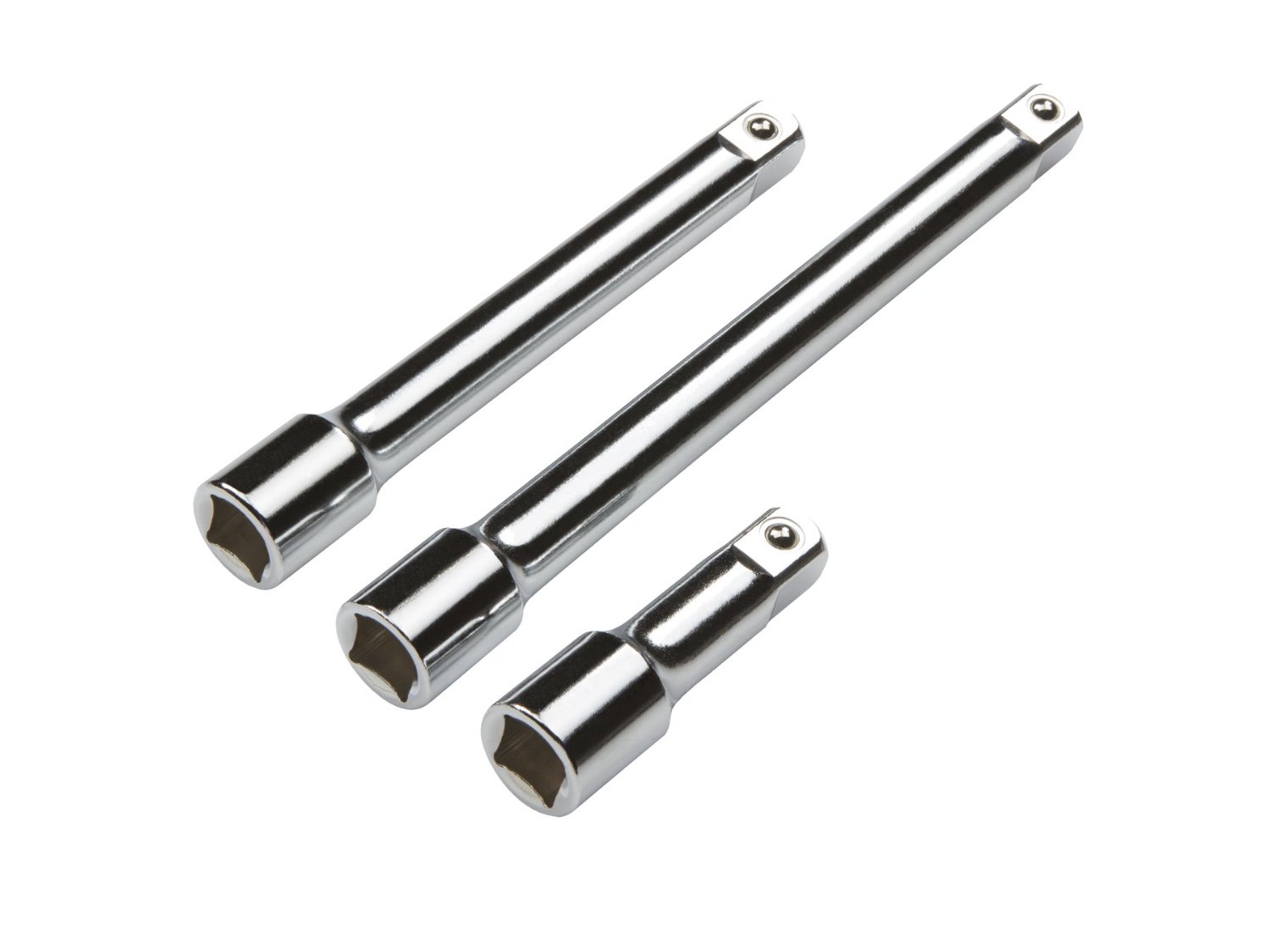
To keep the wrench outside of the tire rim I also use an extender. 1/2″ Socket Extension

Socket Extension Kit

1/2″ Socket Extension

The socket size depends on your lug nut size.

Tire Check Quick Guide
1. Check all RV tires for max pressure listed on tire sidewall.
2. Check tire tread and sidewalls for ware and cracks.
3. Cover tires from sun damage when not using.
4. Keep tires off of storage surface during storage.
5. Check age of tires yearly.
6. Check your tires every time you stop.
7. Do maintenance on your tires as needed.
8. Check lug nut tightness.

Until next time.

The Reason For RVer Hints & Tips

What I plan on doing in this group is covering subjects and topics that are of interest to the Travel Trailer(TT) and 5th Wheel (5er) RV owner. It seems to me that there are a lot of websites and blogs for the big class A motorhomes but not so many for the bumper pull behinds. I do not want to get hung up on which rig is the best or what do I buy to pull my RV.  I want to spend your time on giving you hints and tips that will make your camping experience with your family the best and safest it can be.

Until next time.